

Episode 126
Why Money Should Support Life with George Kinder
Exploring why good financial planning starts with listening, not just number-crunching.
Podcast (podcasts): Play in new window | Download (Duration: 55:17 — 50.6MB) | Embed

April 02, 2026
Episode 126 – Why Money Should Support Life with George Kinder
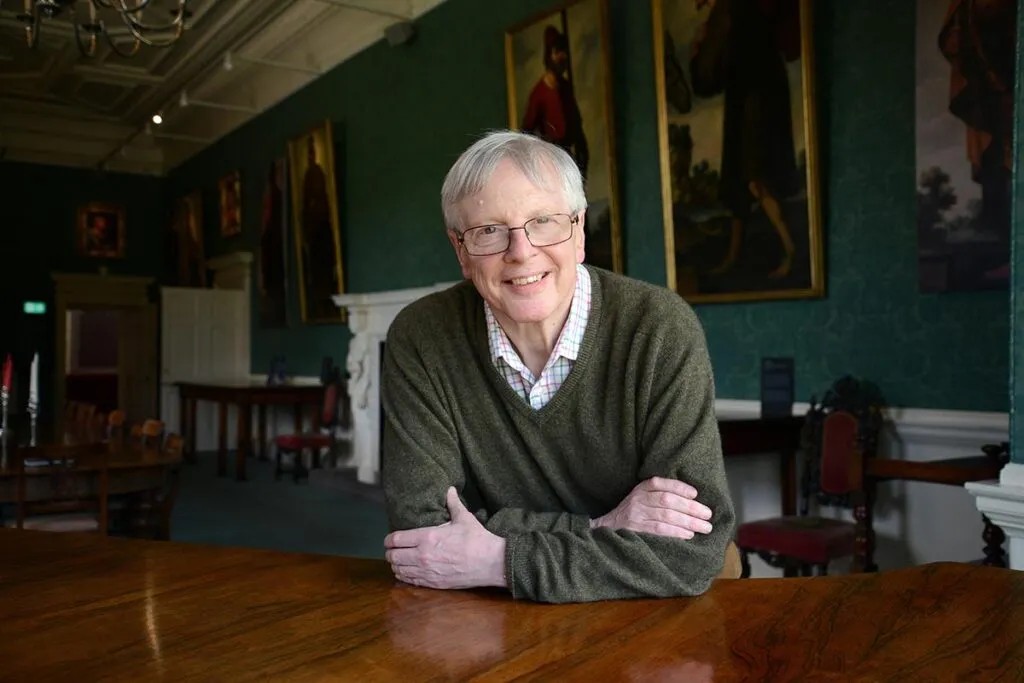
This episode is a thoughtful look at financial wellbeing from a broader perspective. The guys are joined by George Kinder, one of the best-known names in financial life planning. They explore why good financial planning starts with listening, not just number-crunching, and discuss George’s well-known three questions that help people think more deeply about what matters most.
Contents
- Welcomes & Introductions
- What’s on Today’s Podcast?
- Tight Ass Tommo
- Interview with George Kinder
- Conclusions from the guys
- Opening banter and introductions
- Balancing work, family and different roles
- Setting up the main interview
- Tight Ass Tommo: gambling and self-control
- Chris introduces George Kinder
- George’s background and the origins of the three questions
- Listening, empathy and focusing on the future
- A story of change through life planning
- George Kinder’s three questions
- Another example: the ranch dream
- What George means by “freedom”
- Mindfulness, meditation and financial planning
- Fiduciary in All Things: George’s latest project
- Reflecting on George Kinder’s ideas
- Dreaming about retirement and what comes next
- Closing remarks
Welcomes & Introductions
Chris Budd – Founder of Ovation Finance, the Institute for Financial Wellbeing and author of the original Financial Wellbeing Books, you can view all three here
Fancy a chat with Tom Morris, Chartered and award winning Financial Planner at Ovation? Contact details here
What’s on Today’s Podcast?
A chat with financial planning legend George Kinder – exploring why good financial planning starts with listening, not just number-crunching, and discuss George’s well-known three questions that help people think more deeply about what matters most.
Tight Ass Tommo
Light-hearted money saving tips, guaranteed to make you smile and think twice about your spending habits.
This time gambling and and how to avoid being a good host when people visit!
Interview with George Kinder
Why listening matters so much in financial planning
George explains that the quality of advice depends on the quality of the listening that comes before it. The real skill is not jumping straight to solutions, but taking the time to understand what matters most to someone.
The three questions George Kinder is known for
Chris asks George to share the famous three questions he uses to help people think more clearly about their lives. These questions move the focus away from money and towards meaning, priorities and what really matters.
Why money should support life, not dictate it
A central theme of the episode is that many people do not have a money problem as such. They have a clarity problem. They may be doing fine financially, but still not know what they want their money to help them do.
Stories of life planning in action
George shares examples of clients whose priorities became clearer through conversation. One client realised that what mattered most was not earning more, but having more time with his children. Another moved much sooner than expected towards a long-held dream.
The dream of freedom
George talks about what he means by freedom, not as a slogan, but as a way of describing a life that feels meaningful, aligned and true to what matters most.
The link between mindfulness, coaching and financial planning
The discussion also explores mindfulness, presence and emotional intelligence, and why these are more connected to financial planning than many people might think.
Fiduciary in All Things
George introduces his latest project, which argues that organisations should place truth, democracy, people and planet ahead of self-interest. It is a wider conversation about trust, responsibility and the kind of society we want to build.
Conclusions from the guys
Reflecting on the key themes from the interview:
- The challenge and value of active listening, especially in financial planning.
- How difficult many people find it to imagine what comes next, especially around retirement or life after selling a business.
- Retirement, free time and how identity and work can be more closely tied than we sometimes realise.
George Kinder is widely recognised as the father of the life planning movement. Through his writing, teaching and the Kinder Institute of Life Planning, he has helped shape a more human approach to financial planning, one that puts people, purpose and meaning at the centre of the conversation.
For further information, people can visit the Kinder Institute of Life Planning for his work on life planning and the well-known Three Questions
Episode Transcribe:
Opening banter and introductions
David Lloyd:
Hello, everybody, and thanks to the glorious brilliance of modern technology, here we are again with another one of our Financial Wellbeing podcasts.
My name is David Lloyd, your sometimes genial co-host, and with me are the sometimes genial and sometimes grumpy co-hosts. Please introduce yourselves.
Chris Bard, tell us about yourself.
Chris Budd:
Am I the sometimes genial or the sometimes grumpy? Which one should I be?
David Lloyd:
A bit of both, but it’s up to you, Chris. Depends on your mood today. Just go with the flow.
Chris Budd:
I’ll be sometimes genial then.
So, Chris Budd — writer of The Financial Wellbeing Book. I’m a seller of records at markets. What else do I do? I employ ownership experts, all sorts of different stuff. I have 12 different jobs these days, David. I have what they call a portfolio career where I do coaching of people who have sold businesses, all sorts of different stuff. Very interesting life I have at the moment.
David Lloyd:
Well, I was going to say, do you enjoy that? Some people feel the need in work to get fixed on one particular job. As you say, you seem to have about 12 things on the go. Is that preferable to you?
Chris Budd:
Yeah, yeah, I love it. Because one minute I’m a trustee of St Peter’s Hospice in Bristol, which is really purposeful — I really enjoy it, brilliant team of people they have there — and then an hour later I might be doing a one-to-one coaching session with somebody who’s trying to work out what their money is for in their lives. So that’s great fun. It’s always interesting, always something different every day. I love it.
David Lloyd:
Yeah, I always found that when I still do bits of work — I’m kind of semi-retired now — but when I did work more than I do now, I also had a fairly varied portfolio of jobs. That just kept things interesting.
So, talking about interesting, let’s move on to our other co-presenter here, Tom Morris. Hello, Tom.
Tom Morris:
Hello, David.
David Lloyd:
How are you?
Tom Morris:
Yeah, I’m good.
David Lloyd:
That was slightly creepy.
Tom Morris:
Yeah, it was a little bit, wasn’t it? This is what happens when you record podcasts in the morning and I’m here. For those who don’t know — not my best part of the day.
Anyway, I wear various hats these days that I’m juggling. So I’m a parent, I’m a husband, I’m a junior rugby coach, but I’m also a financial planner and Managing Director at Ovation Finance, who support this podcast.
For those who don’t know who we are, we are an independent and chartered financial planning firm based in Bristol, B Corp certified and employee-owned. So yeah, there are my various hats.
Balancing work, family and different roles
David Lloyd:
A question for you then, Tom. I have a son — he’s 37 now, so he’s not exactly still at school — but I do remember those times when he was at school and I had to juggle work and being a parent and all of that.
How do you find that, particularly as I think, like a lot of people now, you may spend a lot of time working from home as well? How do you juggle all those pieces in your life?
Tom Morris:
With great difficulty, David.
Chris alluded to the fact that he does a lot of coaching. The best thing I did is that a few years back, I started engaging with my own coach, who specialises in helping people who are in positions like myself — trying to run businesses, have various hats they need to wear, and just talking it through and working out what has worked for me, how I set my boundaries, and how I switch those hats over.
That was really helpful. So there’s a lot to it, but I would say to anyone who finds themselves juggling a few things, getting somebody to help them understand how they could improve that — someone impartial — is super helpful. Anyway, that’s how I figured it out, David.
David Lloyd:
Very good advice. And how do you think that outlook informs your ability to be what I know you to be, which is a very good financial adviser?
Tom Morris:
I think having experience of lots of different areas of life doesn’t hurt. But I think preaching about coaching clients and then being coached myself, and being on the other side of the fence and seeing the value, is where I think it’s really enhanced me as a financial planner over the last couple of years.
David Lloyd:
Anything to add to that, Chris?
Chris Budd:
Oh, I think that’s great, what you said. The same thing goes for anybody who is doing a customer service job — being on the other side of the telephone or desk or whatever it might be.
Receiving financial planning, for me, was really eye-opening. Little things. When I went to a solicitor who was doing a will for me, Susan, my wife, and I sat for an hour while he went through a list of questions. And at the end of it he said, “Is there anything else that you wish to tell me?”
And I said, “Well, yeah — everything about why we want a will. You haven’t really asked me anything. You’ve just asked me a lot of facts.”
So being on the other side of that was really eye-opening about what really matters to people. So yeah, very wise, Tom, very wise.
David Lloyd:
Yeah, and just to round this off — I was a writer, still am a writer, for over 40 years in television, and over the last six or seven years I started to do some teaching. And I actually discovered that once I started teaching students about screenwriting, I realised that even with the experience I had, there was still more stuff that I could learn. I actually learned quite a lot about my own writing through teaching other people.
So anyway, that’s just a general conversation. It wasn’t planned.
Tom Morris:
No, I love it. I love it. I could carry on with that for the rest of the podcast. We’ve got ourselves the non-interview episode, haven’t we?
David Lloyd:
Yeah, but sadly we can’t do that because we have to go on and deal with our main event.
Setting up the main interview
David Lloyd:
We’ve got a couple of smaller things we need to do first. Chris, what is the main event today?
Chris Budd:
Oh, a bit of a special one, this. The word “legend” is overused, I think, these days, but it’s genuinely appropriate for our guest, George Kinder.
Anybody who is in financial services will know the name George Kinder, and I’ll explain a little bit more before I talk to him. But yeah, special one.
David Lloyd:
Excellent. Good. Looking forward to that.
But before we do that, we need to do another one of our very special things, which is our regular feature, Tight Ass Tommo, where Tom Morris will bring us a brilliant way that you, dear listener, could put into practice to save money.
Tom, what have you got?
In fact, before we go to you, I’m just wondering — Chris, have you got anything?
Tight Ass Tommo: gambling and self-control
Chris Budd:
Well, I do actually. I have a little short one, and it’s a bit serious, so forgive me, but every once in a while I think we can be a bit serious. And it’s this:
Gambling. Don’t.
That’s it.
I was in a casino a few years ago, just for the experience really. Me and Susie went and said, what is being in a casino actually like? I’d never done it before. And it was quite good fun. They gave us a free sandwich — well, this is all rather nice. And we just put modest amounts of money on blackjack, two quid a time, nothing serious.
And then it suddenly dawned on me: if it was possible for me to win, they wouldn’t exist. That casino wouldn’t be there if I was able to come out up on the deal, because then they wouldn’t be making money. They’re a business, and they’re there to make money.
What am I doing? I thought to myself. Why am I in this place that is guaranteed that I can’t win?
Anybody that is a long-term gambler that says they are up, I just don’t believe, because the averages would say you can’t be. If you could be, the gambling industry wouldn’t exist.
Of course, a little flutter on the Grand National is a bit of fun and all that kind of stuff. I’m not going to be too serious about it. But yeah — gambling, don’t do it.
David Lloyd:
Yes, I would agree with that. Like you, I will have the odd flutter on the Grand National.
I’ve got, briefly, two casino stories to tell. One: I was on a cruise with my late wife and we thought, well, they’ve got a casino, let’s go to the casino. So we thought, let’s not throw our money away. We had like 20 quid and thought, let’s see how long we can make this last.
Two minutes. It was gone. And we just walked out of that casino and said, okay, we’re not going to do that again.
A few years later, a little bit older, probably not much wiser, I was in Las Vegas with my son and we were having a bit of a boys’ time away. We thought, right, let’s do a similar thing. So we went into this casino, set ourselves a limit of $50 each, and said if we can walk away with more than that, that’s great, but we must not put any more money into the pot.
Anyway, long story short, we spent seven hours in that casino and had the absolute best of times. At one point our pot was up to about $250. We thought, no, let’s go again, let’s go again. We walked out after seven hours with nothing. But actually, for $100, we had a brilliant seven hours in that casino.
Chris Budd:
Did you buy any drinks and have any meals when you were there?
David Lloyd:
No, because it was all free. In Las Vegas, what they do is bring you free drinks to keep you in there. So actually we didn’t really have to go anywhere. I think we did stop to get some food at one point.
And actually, for me, because we’d imposed strict limits on ourselves, we had a laugh, had some moments of excitement, but we knew when to stop. We knew when to walk away.
So anyway, those are my two experiences of gambling. But basically, I would agree with you, Chris, in principle.
Chris Budd:
Don’t.
Tom Morris:
Sorry, hang on. Basically, I would agree with you, but don’t worry about having a flutter on the Grand National. If you do go to Las Vegas, you get free drinks and we had a wonderful seven hours. Mixed messages going on here.
I feel like I’ve been a little undermined, Tombo. What do you think?
David Lloyd:
Well, you know, life is full of different experiences.
Chris Budd:
Exactly. There’s different viewpoints, and I’ve got loads of them. Tombo, yours is the most important one. What have you got for us today?
Tom Morris:
I don’t know, actually, whether I can top that.
Do you know what? I was thinking to myself — you know when you have friends over, and they might be coming for a cup of coffee or they might just be coming over for a drink, and you’ve got to bring out snacks, and it’s just kind of the thing that you do to be a good host?
Well, I would suggest you tell people that you’re on a health kick so you don’t have to bring any snacks out.
David Lloyd:
That’s genius. You are an evil genius. Very, very good.
Tom Morris:
Healthy and dull.
David Lloyd:
Yeah, quite. Well, I am getting to an age now where all my friends always seem to be talking about how we’re staying fit and not drinking as much as we used to. So yeah, at least I could kind of get away with this general theme.
Chris Budd:
Well, as two people who are somewhat further down the road of life than you, those conversations never change, mate. You’re certainly talking about those same things.
But for me, yes, I’ve been having those conversations for about 40 years. The difference is I’m now actually putting them into practice. Instead of going, “I really should drink less,” I now actually am drinking less.
So maybe, alright, that’s my tight ass tip for today: get old and drink less. Save yourself a fortune.
David Lloyd:
Right, okay. That’s all good then. I think we should probably move on after all this rambling to our main event, which is Chris’s interview with George Kinder.
Anything more to say about this, Chris?
Chris introduces George Kinder
Chris Budd:
Yes. So I first came across George Kinder when a lady I respect very well — a financial adviser — had gone on his course. And it was kind of the first time, 20 years ago, I’d heard of the idea of listening to a client rather than giving them answers to their problems.
George developed this whole technique built around three key questions, which he’ll be telling us about, which is all about helping clients to work out life.
He’s a lovely man. He is also the most jolly, energetic septuagenarian I’ve ever met in my life. He’s absolutely fabulous.
So anyway, I’ll shut up and let us listen to my chat with George Kinder.
Interview: Chris Budd with George Kinder
George’s background and the origins of the three questions
Chris Budd:
George, thank you so much for doing this for us. I really appreciate it.
George Kinder:
Wonderful to be here, Chris.
Chris Budd:
It’s not often that this word is used correctly, but I definitely can call you a legend of the profession, no doubt whatsoever.
I first came across you 20 years ago when somebody told me about your three questions, and it was the first time I’d heard of that approach. So you’ve been a very inspiring man to many people over the years.
I wonder if we can go back to that time and you can perhaps explain what led you to start thinking about coaching skills, how you developed those three questions, and in fact, what they are.
George Kinder:
I was a financial planner and I’d won the bronze medal on the CPA exam, so I was pretty sharp with accounting and I was doing tax work. And I realised it wasn’t what I really wanted to do with my life. So the impetus for the three questions was freedom for myself.
I went to, I think, probably my first conference on financial planning, and there was a really great planner who was talking about goals. He gave a number of different approaches to goals, and I took some of his stuff and adapted it and changed it and tried it this way and that way, and it became the three questions.
But my passion, Chris, is always freedom.
Originally I did it with all my clients, and I discovered, wow, this works. Amazing.
And my clients happened to be — you ask about coaching skills — at the end of my tax career I had 1,000 clients. Five hundred of them were therapists.
Chris Budd:
Wow. There you go.
George Kinder:
And I’m passionate about life, and I wanted to know how to get the best deductions for them I could. So I ended up going to all of their continuing education programmes. I’d spend my weekends, I’d fly to Philadelphia and study with their great guru. And somehow they let me in.
What was really interesting was that I discovered something different. Out of my work, when I designed the seven stages of money maturity, a movement called financial therapy came out of that. That’s huge in the States, and I think pretty big over here as well.
Chris Budd:
Yeah, I actually spoke at the Financial Therapy Association conference last year. I met loads of those people. They were so inspiring, amazing.
George Kinder:
Yeah, fabulous. It all came out of the seven stages work.
Pretty shortly after I’d done that work, I realised they weren’t doing it the way I would have done it — and that I thought I had a much faster way, something much faster, much more effective, and leading to freedom, which is what my aim is.
Listening, empathy and focusing on the future
George Kinder:
In financial therapy often — and this was true in the books that I wrote, particularly the first book — I asked about childhood questions, childhood memories of money, and all that kind of stuff. That’s classic therapy, coming out of my experience with having 500 therapist clients.
But what I realised from all that work with therapists and their gurus was that two things worked far faster than the traditional therapy approach.
And both of them related — one of them deeply related — and that first one is great listening.
A great financial planner, the best financial planner, is the best listener. And among the best financial planners, I think they’re life planners because they’ve been trained hugely in how to listen to a client.
So what I realised was that the therapy movement had given us incredible training about listening, coming out of Carl Rogers’ work and other therapists who talk about having unconditional positive regard for the person you’re with.
Beautiful. How beautiful is that? And how extraordinary that is for a financial planner to think about.
I saw it differently. I saw the aim is not the finances. We shouldn’t be focused on the finances. We need to focus on who the person really wants to be and find the way to most efficiently deliver it.
So the first skill was listening.
Second skill was not going back into the past, but looking at what would be a profound dream of freedom for you? What would it really look like? What would be an extraordinary life?
And strip it of the finances. So we ask in the questions, we strip it of the finances. Only the first question has money in it. And we’re really looking at what is most profoundly meaningful.
When you tap into that level of meaning, the client — the person you’re working with — gets very moved. They can be moved to tears, but they also become very excited, motivated. So what you’re doing is fostering an entrepreneurial energy that nobody knows how to do in financial planning the way a life planner does, because that’s where we’re moving.
A story of change through life planning
Chris Budd:
Have you got any favourite examples of where this has been put into practice? Stories of people changing? What are your favourite ones that you’ve seen over the years?
George Kinder:
One of them was a fellow who worked for an insurance company. He was working 60 hours a week and weekends and all this kind of stuff.
I listened to him, and I heard that what he wanted more than anything was a deep connection with his children. I think there was a six-year-old son and maybe a ten-year-old daughter. And then there was a third relationship that was pretty important to him as well — his spouse.
We listen, and then as a financial life planner, you formulate a vision of what it would be. And I said, “Hey, Martin, if I were to find 10 to 15 extra hours a week, and you were to take that time and deliver it to your ten-year-old daughter, where I think the main problem was, how would that change things for you? Would that fix your life?”
And he just lit up. This was a man who had deep sorrow and despair, and he just lit up and said, “Yeah, wow, wow.”
Of course, very quickly thereafter, we come up with our cynicism, our obstacles, our objections. “Yeah, but how are you going to do that?”
And I said, “Let’s go at it. You know how to do it. I’m here to help you work that out. But let’s think about it. How would you do it?”
So we came up with strategies. The main strategy was that his firm loved him. And anytime you’ve got a cloud hanging over you, so you aren’t living your dream of freedom, it means you’re not productive, you’re not energised. And that goes throughout your life, through everything.
So my vision was that I could get him 15 hours a week out of that 60 hours he was working, and he would be just as productive as he’d been with the 60 hours. And it turned out that was true.
But we had to have a secondary plan of what if they said, “Yeah, we can’t do that with you. Out you go.” And so he had a secondary plan that was worth it to him — that he was willing to leave the job and become self-employed and take on all the rigours and challenges and risks of that for his daughter.
Chris Budd:
Wow. Fantastic. Lovely. Thank you.
George Kinder’s three questions
Chris Budd:
So our listeners will be saying to themselves: what are the three questions? Are you happy to share?
George Kinder:
Absolutely.
They’re meant to be not asked as individual questions so much as part of a triad. They go together and you do them one right after another because they’re meant to lead somewhere — to lead into who you really are, who you really want to be.
Question 1
The first question is the easy one. It’s like winning the lottery, going to Disneyland when you’re a kid. You wake up in the morning and realise, “My God, I’ve got all the money I need for the rest of my life. Wow. What am I going to do with my life?”
So that’s the question. You’ve got everything you need. What would you do?
It’s fun. You get the bucket list and the travel and the special relationships. You might pick up a certain kind of dance, play a musical instrument, go sailing more. It loosens people up and they begin to think about what they care about, what would be fun in life.
Question 2
This time you go to the doctor and she says, “I’m terribly sorry. You have a rare ailment and you’re going to live as well as you feel right now. But five to ten years from now — and we can’t predict exactly when — you’re just going to keel over. You’ll die without any forewarning at all.”
So the question is: if you knew that you only had five to ten years left to live, what would you do differently? How would you live your life? How would your priorities change? What actions would you take?
Very often, relationships come up in this question. People say, “Gosh, I want to be with my buddies. I want to be with my friends. I want to be with my kids. I want to be with my family.”
Question 3
And then immediately after finishing that question, you go to the third question.
This time you go to the doctor and she says, “I’m terribly sorry. We’ve misdiagnosed you. In fact, you have 24 hours left to live.”
So the question here is not about what you might do in those 24 hours. The question is: reflecting on how you’d anticipated spending your life, what did you miss? Who did you not get to be? What did you not get to do?
That touches a pretty deep chord. Most of the time, it leads to a recognition of: “Oh my God, I haven’t done that yet. And I keep putting it off.”
It turns out that question has more in it for the dream of freedom than either of the other questions combined.
Another example: the ranch dream
George Kinder:
Another example is a fellow from Texas, a leader in the financial planning world. He came through the five-day training that we do, and his dream was to have a ranch. He figured he’d do it in retirement — maybe in 15 years, maybe 30.
But it was right there in question number three. It was the big deal. And we said, nope — you’re meant to have this now, or within short order, maybe two or three years, but soon.
The cool thing is he got so excited about it that it was probably within ten days of my doing this work with him that he called me up and said, “George, I’ve put down a down payment.”
A lot of risk. But the energy and the delight fed him for those next ten to fifteen years. So he actually was much more productive in his business as a consequence.
Chris Budd:
Wow. Really profound stuff, George.
What George means by “freedom”
Chris Budd:
Let’s unpack that word freedom just for a minute or two maybe. It’s a troublesome word at times. It can mean different things to different people. So when you say “dream of freedom,” what do you mean?
George Kinder:
To me, those are two questions: what do I mean by the dream of freedom, and what do I mean by freedom?
In my latest book, The Three Domains of Freedom, there are three domains:
- each moment is yours
- your life is yours
- civilisation is yours
The dream of freedom belongs in that second category: your life is yours.
That’s what I’ve been talking about with these people I life planned. It’s not about the present moment as much. It’s about: this is who I am, the history of who I am, and who I feel that I am now — and this is who I really want to be. This is how I really want to live.
If you nail that in a deep, passionate, profound way for yourself, so that it’s really meaningful and not just about financial stuff, you come alive.
Each person has their own dream of freedom. It’s linked to the most powerful and profound questions or passions they might have.
For a huge number of people, the number one thing in their dream of freedom is family or relationships. The second thing I found was what I’d call spiritual freedom or values — living with authenticity, living in alignment with what matters most. The third is creativity. The fourth is community. And the fifth used to be the environment.
Chris Budd:
So in that case, by freedom, you’re meaning the freedom to be living your life in accordance with your values?
George Kinder:
Yeah, in a way.
Mindfulness, meditation and financial planning
Chris Budd:
You’ve touched on something there that I would just like to spend a minute or two on. Meditation and mindfulness is something that’s a big part of your work. That’s not something people might always associate with financial planning. So tell me how that integrates.
George Kinder:
We live a life. Financial planning is largely designed around this trajectory from birth to death, basically. And what we’re looking at in financial planning — a great financial planner — is looking to deliver a client into an experience, an ongoing experience of freedom that makes their life flourish from this moment in the meeting for the rest of their life.
That’s a trajectory from the past to the future, and it’s living in the present moment along it. But the present moment has a higher degree of reality to it than past and future, because the only time we ever experience anything is in the present moment.
So why would we not want to become a master of the present moment?
And wouldn’t that help your finances? I think obviously it would. Prioritising things.
Mindfulness is the practice toward that — the practice of becoming a master of the present moment.
Mindfulness is also a practice toward the mastery of listening, because you’re listening inside yourself, not to thoughts, but to experiences, moment by moment.
And mindfulness is a practice toward the mastery of emotional intelligence. Our anxieties, our fears, our shames, our guilts — these disrupt our focus. Mindfulness helps us learn to be more at ease again and again with the emotional challenges that come up.
One more thing here. This is from Scientific American, December 2024. People don’t realise how profound listening is. The studies they reported said that listening is 100 million times as fast as thinking.
Mindfulness is the practice toward the mastery of listening.
Chris Budd:
When I started meditating a few years ago, one of the things that I read that really helped me understand it all was that meditation is the training for mindfulness. So I think of meditation as the training; mindfulness is the act itself.
Fiduciary in All Things: George’s latest project
Chris Budd:
I don’t want us to use up all our time talking about your latest passions, George. Tell me about Fiduciary in All Things, which is your latest project. And perhaps first, for an English audience who might not be so commonly using the word fiduciary, what do you mean by that?
George Kinder:
Fiduciary — the Latin root means trust or faithfulness. It’s a term used in England and the UK, but not as much as in America.
What it really means is this: a fiduciary puts the interests of someone else, of their client for instance, ahead of their own self-interest.
That’s a phenomenal thing. It’s a beautiful thing. It’s why you and I have loved being in the financial world, because the best financial advisers are fiduciaries. They put their clients first, ahead of their own self-interest.
But we’re in a dangerous place in the world. This should be a glorious time for humanity. Ninety percent of people have a smartphone. We are together as humanity for the first time in history ever.
This should be a glorious time of us actually putting together what it means to be human and what it means to be part of the human race and designing the civilisation that flourishes with freedom and happiness going forward.
And what are we finding? The earth is burning up. There’s autocracy taking over democracies. There’s inequality. We can’t trust institutions to tell the truth.
In economic terms, these are called negative externalities of business or government.
Right now in the world, the main fiduciary notion is that management of a business have a fiduciary responsibility to their shareholders. And that’s interpreted as being a fiduciary responsibility to profit.
That is the major fiduciary responsibility that’s out there.
In America, the three richest people now own as much as 180 million people — the lower half of the population. In the world, 26 billionaires own as much as 3.8 billion people.
If there is a fiduciary notion in society of caring for others ahead of ourselves, is that fiduciary notion going to those three people, or is it going to society and humanity and democracy? It’s pretty clear.
So what I’ve come up with is pretty cool. Instead of being fiduciary to just profit, or as you and I are, fiduciary to our clients, we take it further.
B Corps do this. They say people, planet and profit.
What I realised was that model doesn’t have enough teeth because it’s not required by law — it’s voluntary.
So I’ve done two things:
- I’ve added to people and planet the values of truth and democracy
- I’ve said: let’s make it law
So I’ve got a single sentence legislative proposal that, if we made law, would transform everything. It would require all organisations to place those four qualities — truth, democracy, people and planet — first, ahead of their own self-interest.
If they did, the planet crisis would diminish, democracy would be reignited, inequality would diminish dramatically, and we could trust our media and institutions to tell the truth and be trustworthy.
I host kitchen table conversations with neighbours and friends and family, and I ask one question:
If every institution you encountered in your life was humane and trustworthy in everything they did, how would that feel? How would your life change?
That’s the society we’re meant to go for. That’s the society we’re meant to live in. And anything else is unsustainable.
Chris Budd:
Fantastic. George, we could talk for hours. I know we could. This has been absolutely brilliant, and I know our listeners will absolutely love this.
Good luck with Fiduciary in All Things. The world needs it to work, doesn’t it? So thank you very, very much for your time, George. I really appreciate it.
George Kinder:
Wonderful. Thank you. Thank you, Chris.
Post-interview discussion
Reflecting on George Kinder’s ideas
David Lloyd:
Wow. Yes, Chris, you were right — jolly and energetic. Two words I would use to describe George. Fantastic interview.
What do you think, Tom?
Tom Morris:
Firstly, as a practising financial planner, to get an opportunity to listen to him talk for half an hour or so is enlightening, to say the least.
I’ve had the privilege of watching him talk on stage, in particular about the fiduciary movement. The key bit that struck me — and it’s something I talk about with my colleagues all the time, and people who are trying to train as financial planners — is the listening.
It was something I was taught very early doors. Chris was very good with me on this. Being a really good active listener is really difficult.
I’m trying to remember the stat he used — our listening speed is a millionth of the speed of thought. And I can imagine that when you’re in a meeting with somebody and really trying to understand them, you can quickly go to what they’ve said and start going to: what question am I going to ask? What does that mean for their finances?
You can really get ahead of yourself. And actually being in that moment, listening to what’s being said, and empathetically listening as he described, is an incredibly difficult task and one that needs practice.
But if you can get it right, you can really, really help an individual who you’re talking to.
And that obviously doesn’t just work within financial advice.
Chris Budd:
No, of course. This skill that I’ve trained in coaching, I use it all the time in all walks of life — with the kids, with the wife, friends, all the time. I just shut up every once in a while and listen.
Massively huge tip. So hard to do and yet so profound.
David Lloyd:
Yeah, that’s really important.
And having engaged with both of you, not just on a personal level but particularly on a work level, you both have that ability to have the technical expertise about money that I certainly don’t have, but then also the emotional intelligence to actively listen to what people are saying.
And I thought the three questions are just great, aren’t they? It takes away all those surface-level desires and really gets to the heart of what people really, really want in their life.
Dreaming about retirement and what comes next
Chris Budd:
I was interested in his dream of freedom bit — the guy with the ranch, all that stuff.
I think it’s my age. I’m in my late 50s. I work with a number of business owners, some of whom are looking to sell at some point. I speak with lots of business owners looking to sell. I speak with lots of friends who are thinking about retirement.
So I have this conversation about what do I do next with people all the time.
One of the things that I find is that they really struggle to dream of freedom — to dream about the next thing they might want to do, their long-held dream.
So his tips about the common themes that have emerged over time that he’s discovered is a really good starting point.
Things like creativity and living according to your personal values — they’re good prompts for people to apply to themselves and think: when I retire, what am I going to do?
Let’s start by listing some of those things. Contributing to community. Let’s put some priorities down. Right, now let’s apply that to my life and say, what emerges?
David Lloyd:
Yeah, that’s really interesting.
So my personal experience as I drift into semi-retirement has been that the nature of the work that I did was — and we touched on this earlier — I had lots of different things going on, but I also had periods of inactivity where there was no work around.
Clearly that led to some financial stresses, but it meant that I was kind of quite used to having free time during the day, during the week. Therefore, when retirement came along, it wasn’t like work had suddenly stopped and I had this big empty expanse of free time, because I was kind of used to having that in my life.
Contrast that with my partner Gail, who worked 40 years in the NHS as a doctor. She still does little bits and pieces. But she found it really, really difficult.
She couldn’t wait to stop working, but then when she stopped, she actually thought, hang on a minute — one of the ways in which she validated herself as a person was through her work. And making that adjustment to retirement, she found difficult in a slightly different way.
I think she’s getting there now. But yeah — really, really interesting interview. Fascinating topic.
Closing remarks
David Lloyd:
Right. Okay. So I think we’ve said everything there is to be said about that.
Chris, absolutely fantastic. Thank you very much for that.
Thank you, dear listeners, for giving us some of your time and spending some time with us today to listen to yet another one of our Financial Wellbeing podcasts.
Podcast (podcasts): Play in new window | Download (Duration: 55:17 — 50.6MB) | Embed
Subscribe to episodes



More podcasts



Do you have any financial wellbeing questions you would like us to answer? Or do you have a #tightasstommo money saving tip you would like to share with our listeners?
If so, let us know by going to Twitter @Finwellbeing or email – contact@financialwell-being.co.uk
If you would like to purchase a copy of The Financial Wellbeing Book please click on this link to visit Penny Brohn UK shop