

Episode 122
Money, Purpose and Community with Jonathan Ruffer
What lessons can we all take from the story of great wealth used for extraordinary change?
Podcast (podcasts): Play in new window | Download (Duration: 42:22 — 97.2MB) | Embed
September 30, 2025
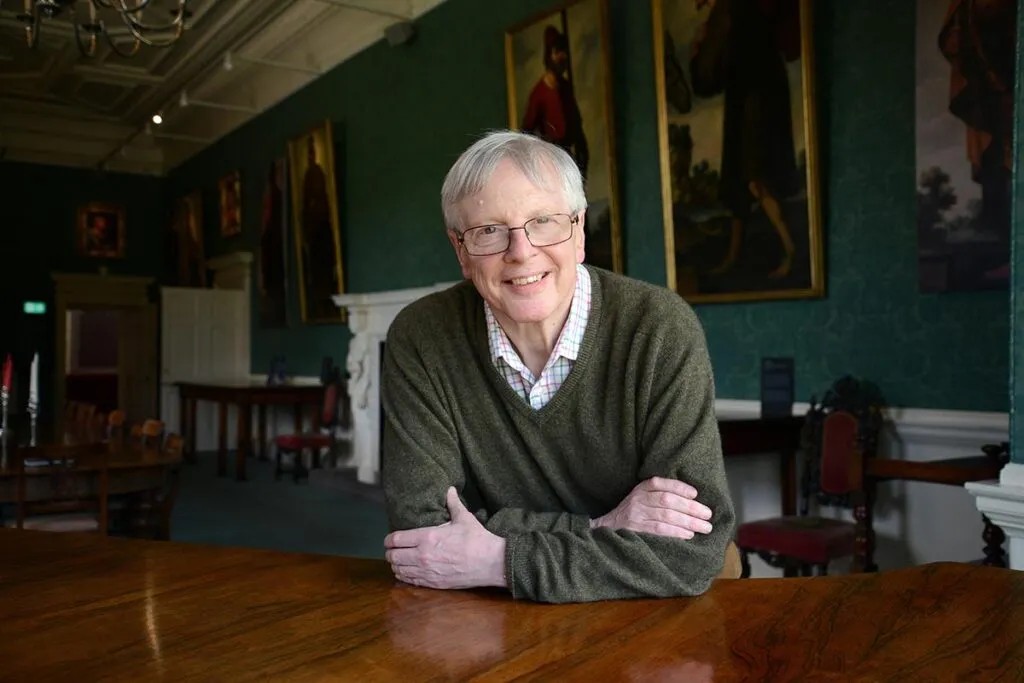
In this episode of The Financial Wellbeing Podcast, the guys explore how wealth, when used with purpose, can create extraordinary change. They’re joined by philanthropist Jonathan Ruffer, who shares the remarkable story of how he has devoted his resources to revitalising the town of Bishop Auckland. Along the way, we reflect on the dangers of money without meaning, the importance of community, and how finding purpose can enrich every stage of life – especially when approaching retirement.
Welcomes & Introductions
Chris Budd – Founder of Ovation Finance, the Institute for Financial Wellbeing and author of the original Financial Wellbeing Books, you can view all three here
Fancy a chat with Tom Morris, Chartered and award winning Financial Planner at Ovation? Contact details here
What’s on Today’s Podcast?
Our chat with Jonathan Ruffer around how he has used his wealth in an extraordinary way through The Auckland Project, helping to transform the community of Bishop Auckland. Jonathan talks about purpose, education, community spirit, and the lessons learned from putting money to work for the benefit of others.
Tight Ass Tommo
The Borrow Box app for free audio books from your library.
Always check eligibility for rail cards – two together for couples you can get 1/3rd off rail fair if you travel together
Interview with Jonathan Ruffer
- How Jonathan became involved in Bishop Auckland and the vision behind The Auckland Project.
- Why wealth can be dangerous when it lacks direction or purpose. Reflections on how money can both distort and enrich lives, and why defining your own purpose is essential to financial wellbeing.
- Education and community engagement were central to Jonathan Ruffer’s vision for The Auckland Project. The role of education in creating long-term change.
- The importance of engaging local people in community transformation.
Conclusions from the guys
Avoid the deadly retirement
Come and speak to Ovation Finance, who want to talk with you about what you want your retirement to look like
Retirement often comes with baggage and many people don’t like the word. Producer Tommo often finds people don’t like being pushed into retirement but pulled towards something else.
Find Out More
The Auckland Project is a remarkable initiative bringing new life, education, and opportunity to the town of Bishop Auckland. From restoring historic landmarks to enriching local schools and building a stronger community spirit, it’s a shining example of how purpose and philanthropy can create lasting change. To discover more about their work and how you can plan your visit, come and take a look – www.theaucklandproject.org.
Transcript of Episode:
David Lloyd: Well, hello everybody. There you are sitting at home idly flicking through your normal podcast supplier and you’re thinking, oh, what should I listen to today? And you’ve suddenly stumbled upon this one. Now it could be good news for you if you are interested in a finance business, B, your own well being, and C, a jolly good bit of banter between three old mates talking about all of those issues.
David Lloyd welcomes number 122 in our long running series of financial well being podcasts
In which case, welcome to number 122 in our long running series of financial well being podcasts. my name’s David Lloyd. I am a writer, a broadcaster, man about town, sort of semi retired, but still doing little bits and pieces and still very much enjoying being one of the hosts of this podcast along with my two mates here, Chris Bud and Tom Morris. Chris, say hello and introduce yourself, please.
Chris Budd: Hello and introduce yourself please.
David Lloyd: Thank you very much.
Chris Budd: Chris Bud. I wrote the original Financial Wellbeing book back in 2015. I published the Four Cornerstones of Financial wellbeing a few years ago, founded the Institute for Financial well Being. Oh, founded Ovation Finance. I’m exhausted, I’m knackered.
David Lloyd: You do a lot, don’t you? Okay, so that’s you, Chris, Tom, how do you fit into this?
Producer Tommo: It’s not. I’m going to come from a long run up, I’m going to go for it. Here we go. So, day job. I am a, I’m the director and charter financial planner at Ovation Finance who sponsor this podcast and have done throughout very proudly B Corp certified and employee owned. So there’s a little bit about us, but me personally, I am an award winning financial well being expert and also how Chris found the Institute for Financial well Being. So, I think between, between us we, we got enough experience and I think we’re allowed to talk about the topic.
David Lloyd: Yeah, absolutely, I think that’s right. You two certainly have the knowledge and I have the ability to make it up as I go along.
Producer Tommo: There you go. Which is exactly what’s happened for all these years.
David Lloyd: Exactly. And ask you all the relevant questions as the person that kind of has obviously picked up a few tips along the way.
I was asked to help record a promotional video for Ovation Finance
But I’m the innocent, the innocent person here in this world of money now, talking about this world of money and talking about Ovation Finance. I was very privileged yesterday to have been asked to help record a promotional video for Ovation Finance. Now I’ve been a client of Ovation for I think about 20 years. I was trying to work out how long it is, but I. A good long time. Certainly And I have to say, full disclosure, they’ve looked after me ever so well. Chris was my first financial adviser. I’ve had several along the way. And then Tom has been my financial advisor for quite a few years now. And we have to say, I’d say we have a very good and honest relationship, which I value very much indeed.
Chris was asked to come up with three words that best describe Tom Morris
Now yesterday, during the filming of this promotional video, I was asked to come up with three words that best describe Tom Morris.
Chris Budd: I want to play. I want to play. I want to play.
David Lloyd: I’m not going to share those with you now, Chris, I’m wondering, what springs to your mind? Three words to describe Tom Morris?
Chris Budd: Well, I can think of two straight off the bat, tight and ass.
Chris Budd: And I would probably throw rugby into that as well because he loves his rugby. There you go. Tight ass rugby.
David Lloyd: I’m going to give you the opportunity now tomorrow, three words to describe yourself.
Producer Tommo: Financial well being award. Oh, that doesn’t work, does it? No. Oh, I don’t know. I can’t, I, I can’t do it. I, can’t do that. Although you, you joke about the title. I was at a conference like a couple of months back now and I was just chatting away to somebody and I got this little tap on my shoulder. I said, I recognise your voice. I said, yeah, it’s a Jill Tight Ass Tomo. And I was like, not Tom Morris, the, you know, the financial planner and somebody who I think was there to provide some good insight. No, you’re tight as Tomo. So my alter ego has absolutely taken over who I actually am. But there you go, it’s an important.
David Lloyd: Part of who you are and in fact that seems to be an obvious opportunity.
David: Tom Morris has a dry wit that underpins this podcast
Chris Budd: Before you do that, I want to just chuck one genuine word in for Tomo and I’m going to embarrass him here by being actually not taking a mickey. But, I would say a word I would use to describe Tomo is interested. He’s very open minded and interested in the world and in learning and I think that’s a massive thing to his credit.
David Lloyd: Very good, very good.
Producer Tommo: Bless you. Chris checks in the post.
David Lloyd: As I say, I might divulge the three words that I used if I could remember what they were. One of them, I will say now, one of them was funny because I think Tom Morris has a dry wit that underpins this podcast.
Jonathan Ruffer: Yeah.
Chris Budd: The only thing is, David, that we’re now going to hear from him for a while and that’s going to undermine what you’ve Just said, isn’t it?
Producer Tommo: Yeah.
Let’s do a social media poll on whether Tom Morris is funny
David Lloyd: All right, listeners, it’s up to you to decide whether or not you agree with me that Tom Morris is funny.
Chris Budd: Let’s do a poll. Let’s do a social media poll.
David Lloyd: Indeed. Yes, please do, please do. Three words to describe Tom Morris. If you want to chip in with three words to describe Chris Budd I and indeed three words to describe me, feel free. Obviously any unpleasant ones about me will be edited out. Any honest ones about the other two will be included.
Producer Tommo: Problem is, I bet myself and Chris, our minds are quickly going to a few people that we know and trust and respect who will be very happy to. Yeah, how do I put it? Happily put not polite ones about us out there. So yeah, just there’s a little bit.
David Lloyd: Of fun for the listeners. Three words to describe Tom Morrison.
Today’s podcast features a chat with successful investment manager Jonathan Ruffer
Need anybody else involved in this podcast now before we dive deeper into Tom Morris’s meanness, we ought to at least find out what is in today’s episode. What’s happening today, Chris?
Chris Budd: So today, David, we are going to hear a chat I had with one of my favourite people in the financial world, a chap called Jonathan Ruffer. You’ll hear all about this, but Jonathan is a very successful investment manager who has used his money to quite extraordinarily positive means. And I, he’s just hilarious and also massively warm hearted. So yeah, we’re gonna hit my. I’ll tell you more about him in the introduction when we get there but he’s, he’s worth sticking around for, I tell you.
David Lloyd: Excellent. Good, I look forward to that. Right, so as previously mentioned, let us now return to one of the favourite items in the podcast. Before we do this interview, we’re gonna hear in a moment from our titan, of tightness, our monarch of meanness, our parsimonious, Prince Tom Morris in terms of how we can save money on important or sometimes unimportant things.
Borrow Box allows you to get free audiobooks from library service
before we move on, Chris, have you got a tip for us this week?
Chris Budd: I do actually. So, Vicki Hull is a good friend of mine and I know of yours, David. she was the first administrator of the Institute for Financial Wellbeing and an all round good egg. Vicki has a little tip of an app that you can use called Borrow Box. Now Borrow Box is the an app from the library service which enables you to get free audiobooks. So rather than paying certain online streamers who have already got multi billions that don’t need any more m money to download their books from them, you can get them for free from the library service using this app called Borrow Box.
David Lloyd: Well, that’s fantastic. And I’m going to look into that because I don’t really do audiobooks. One is because, I’d kind of rather read a book than listen to it. But there are times when I think, think, oh yeah, be quite nice to listen to that. Maybe on a long journey or something like that. But I’m always put off by the fact that you might get one free but then you really have to fork out quite a lot of money.
Chris Budd: Yeah, exactly.
David Lloyd: now speaking as an author, I probably shouldn’t complain about that, providing some of that money comes back to me. However, the fact that you can do it for free if you are not in a position to pay for them, that’s great. Any extension of our basic library service I think is a good one by me. So well done Vicky, for that suggestion.
Two Together railcard gives you a third off train tickets if travelling together
Tom, what have you got for us today?
Producer Tommo: Do you know what? This came to mind and was inspired by a conversation with Chris, actually. I don’t know whether he’ll remember. Train travel. Not the cheapest thing in the world, let’s be honest. It’s starting to become more and more prohibitive, unfortunately. But it’s always worth checking what rail cards you might be entitled to. and I’ll give a specific example in a minute. But, but these rail cards, they cost around 35 pounds a year. They give you access to around about a third off of train tickets. So usually people of a certain age, I, think there’s ones for if you’re under 30, those that are over 60 or state pension age would be able to buy one as well. Some, if you have any links to the military and have, have done any service there, you get one. But but one that would, could potentially work for a lot of people is something called Two Together railcard. And this is where you can buy one as a couple. And providing you’re travelling together when you are using the tickets, you’ll both get a third off of your train fare. So I think. Chris, you used it with Susie, didn’t you?
Chris Budd: That’s right. In fact, the reduced fare plus the cost of the rail card was less than the cost of the ticket would have been.
Producer Tommo: Yeah, so, so you first, you usually use it for that first journey, might save a bit of money or be cost neutral, but then your quids in for the rest of the year and yeah, there you go. If you travel with somebody quite regularly, you think couples going into, going to various parts of the country on train. Get one of these, cost you 35 quid a year, and you go and get yourself a third off of train travel if you go together. So I thought that would be quite a useful tip.
David Lloyd: Now, that is a brilliant tip. And I am the proud owner of a Senior Railcard, and I have been for 10 years now, because you get one when you’re over 60 and you can over three years pay, I think it’s £75 for three years. And on that basis I use it twice, maybe three times, and it’s paid for itself. And in fact, I’m going up to London on next, Monday to see a prom at the Royal Albert hall. And my return ticket, which would normally cost well over a hundred pounds, is costing me £49. so it’s definitely worth doing. And I didn’t know about this. Two together, one, but that’s really good. Don’t get me started on the complex nature of rail tickets.
Chris Budd: Good idea in this country.
David Lloyd: But obviously any opportunity we can take to use the trains, which are, logically very good and very green, and obviously keeps traffic off the roads. And if we can do it in an affordable way, I think that’s a great tip. So thank you very much, Tom.
Chris: I first met Jonathan Ruffer many years ago at Ovation
Right, let’s move on then, Chris, You’ve whet our appetite very nicely for this interview. Tell us a little bit more.
Chris Budd: So, Jonathan Ruffer, I know Jonathan because he offered me a job many years ago. I had only just started Ovation, and I was recommended to him to set up his financial planning for his investment company. And I had a very memorable meeting with him. A couple of meetings, actually. You always know. And, forgive me if this is. I hope this isn’t offensive to anybody. You always know when somebody’s super duper posh because they don’t necessarily look after themselves in the same way as the rest of us. And when I first met him, he had this pair of glasses on which were held together by a paperclip. Only the super Posh can get away with things like that. I absolutely fell in love with him immediately. He’s got a great turn of phrase. so I kind of watched his career, decided obviously not to join in, and continued founding Ovation. But one of the. He caught my attention again recently because I read that he’d done something interesting with the town called Bishop Auckland in County Durham. And so I looked into it and he has done incredible things there to the extent I just looked up his net worth on Wikipedia. Now, I don’t Always believe what I read on Wikipedia about things like net worth, but it’ll give you an indication. It says as of 2014 he had an estimated wealth of 380 million pounds. As of 2020 he had an estimated wealth of 159 million pounds. The difference is what he did to Bishop Auckland.
Chris: Jonathan Ruffa, thanks so much for joining us today
So let’s have a listen to my chat with Jonathan Ruffa. Jonathan, thanks so much for joining us. I really appreciate it.
Jonathan Ruffer: It’s great to be here. Chris.
Chris Budd: I think the last time we met, one of the things I remember about you so well is that you had a pair of glasses which were held together by a paper clip.
Jonathan Ruffer: Well, you must have been quite fortunate because that paperclip fell out and I never saw it again, so that it was two hands holding the thing.
Chris Budd: Thing.
Jonathan Flanagan describes hijacking moment when he realised what he wanted to do
So Jonathan, I, I, I wonder if you could just introduce us to the Auckland project and tell us what brought you there and what were your drivers in, in getting this thing off the ground, this extraordinary project you’ve built.
Jonathan Ruffer: well, it was a, a bit of a surprise. I didn’t really see it coming. I’m pretty gody and I thought I’d give off on a retreat, just for a sort of spiritual wash and brush up. And it was an eight day silent thing and on day two I was hijacked and I mean really nothing like it has happened before or since. But there was me minding my own business, running an investment company and I got the clear understanding that my job from now on, was working with the voiceless. And I come from the northeast of England and so I knew that it would be somewhere up the northeast of England and I’d never been to Bishop Auckland but that seemed to be the right place to go. So I pitched in there about 14 years ago and been there.
Chris Budd: and did you know about the need that they had for, with the Spanish Gallery and the palace, et cetera? Did you know about that when you went there or did you.
Jonathan Ruffer: No, I mean I put it there. There wasn’t anything there when we, it.
Chris Budd: Was a, not the palace. You didn’t build the palace, did you? Crikey.
Jonathan Ruffer: Bugger off, Chris. that threw me for a loop. Bishop Auckland certainly presented as an absolutely standard, fair, ah, post industrial town whose purpose had disappeared. It was the absolute centre of the mining industry. it never had coal mines around it except right in the very early days. But it was the administrative centre and it was particularly the place where was the grandest marshalling yard after Swindon. So that everybody’s little one shaft coal mine had a spur off the railway. And they put the coal in a cart, it would trundle off to Bishop Auckland and that’s where it got sorted together. And all the lawyers, all the accountants, all the spivs, they occupied Auckland Castle. But that all disappeared. And it really didn’t leave anything very much there. But what it did have was this palace. And in it there were a set of 13 Old Master Spanish pictures. And Chris, what you have to imagine is a rain soaked, private eclipse ecclesiastical building where bishops have lived in for a thousand years. And these sunny, flamboyant, really in your face Spanish pictures. And you think to yourself, what are they doing there? And the difficulty I could see is that you either tell a story with your raincoat on about the wet palace or you put your panama on and do a little skippy jump and talk about the Spanish pictures. And I couldn’t see it would be possible to do that in the same place. So we built a Spanish gallery, just down the road from it.
Chris Budd: Fantastic. Can I just go back to that hijacking moment you talked about? Because that’s the bit that interests me. Yeah, there’s clearly a faith element to that. Could you describe that hijacking moment when you realised what you wanted to do with your money?
Jonathan Ruffer: Well, I tell you what happened, Chris. I didn’t really talk about this very much, but the way a silent retreat works is there’s a communion service every day and you can, you know, can sing the hymns and yabber at that. And you have a spiritual director, who is meant to keep you straight. And on the first evening the priest taking the communion said, oh, Father o’ Flanagan has had a funny turn and is in hospital. And Maria, who works in the kitchen as an assistant, she’s had a funny turn and she’s in hospital. And the next day we heard all about Father o’ Flanagan and nothing about Maria. And I said to the my bloke, I don’t want to find tomorrow we hear all about Father o’ Flanagan and nothing about Maria. And exactly the same thing happened the following night. And I was furious because I thought, you know, they’re both people. But one was, you know, a grandee with his dog collar turned around, and the other was just somebody working in the kitchen. And I found myself shaking my fist and saying rhetorically, who will look after the little person? And I got a message straight back saying that’s a dangerous question to ask. That’s all it was. So I thought, well, yes, having asked the question, I better volunteer.
Chris Budd: So you talk yourself into it.
Jonathan Ruffer: I shouted myself into it.
Chris Budd: And, your wife, what was her thoughts on the whole thing? She’s not a joint subject.
Jonathan Ruffer: I, I mean, if I said we’re off doing underwater basket weaving, she’d have just got. And got a snorkel and come back.
Chris Budd: Maybe that’s your next project. Who knows?
You say having too much money can corrupt you
So tell us what happened then. So you made this decision. You went up to Bishop Auckland, you saw the potential. We saw the paintings. Then what happens? At some point in time, I assume, you’ve got to dip into your pocket.
Jonathan Ruffer: Yes. I mean, it was always, clear, that money would be rather a central thing. I mean, I think, it’s a very dangerous thing to have too much money because it coarsens you and you can’t help it. It’s like getting old, you know that, you know, we start off being adenuses and, aphrodites. But when you get older, you know, some of us get fat, some of us get thin, some of us get wrinkles, some of us get shiny faces. But, ageing never makes you look better than you were, when you were younger. and that’s what money does. The more money you have, the more, one way or another, it will distort you. It might make you very anxious, it might make you very arrogant. It might make you rather pleased with yourself. There are many different bunkers to land in. But what it does do is to take away the fairway. So you can choose which bunker you go into. but you can’t keep on the straight and narrow.
Chris Budd: Why not? What’s behind?
Jonathan Ruffer: Well, exactly. Why not? You know, who knows what is? You know, I’m sure you can get some clever, clogged doctor to explain, you know, the breakdown of the this and the that in the bodies, what makes you ugly as sin when you’re old? I merely observe this. You know, I move in circles where, you know, I routinely see people who’ve got too many naughts for a typewriter on their wealth. And the difficulty is that if you allow that to happen, it becomes your life. If you’re Prince Charles as he was, you can’t help what you were born with. And you’ve got to live with that cross on your back. I mean, you can run away if you do, but then you simply become a different sort of cliche. But money isn’t like that. You can give it away. And I didn’t see myself as being, a wonderfully generous hearted person. I’m one of the meanest people I know. I see myself like a drainpipe. Whatever comes in the top comes shooting down the drainpipe and then it sloshes about at the bottom and I can direct where it sloshes. But as far as I’m concerned, what comes in the top legally is mine. Actually, it isn’t anymore. It goes straight into a charity. But, the principle’s the same, is you need to put it to one side and that’s really just an act of will. And I don’t at all feel that, that there’s any privilege in it. It’s rather like, you know, if you meet very beautiful women or very handsome men, they become cardboard figures. You know, if you meet the King, he can’t get away from the fact that the only thing you can think of when you’re talking to him is I’m talking to the King, you know. Wow, how boring that must be when you’re the other side of that trade.
Chris Budd: Yeah. I’ve often thought the same thing about somebody like, say, Paul McCartney.
Jonathan Ruffer: Yeah, exactly. You know, there’s a chap whose life was ruined simply because he got a rather narrow strand of talent, you know, what a disaster.
Chris Budd: I’m not sure I would put it quite that way, but I know what you mean. So, look, I’m fascinated by this stuff.
Bishop Auckland is about 25,000 people and has huge influence
Let’s just touch again on the, on the, on the project, however, because you’ve got. I’m just looking at your website here. You’ve got a mate, you’ve got the railway, you’ve got a deer park, mining art gallery, the Faith museum. Wow. I mean, it’s built into something quite extraordinary, isn’t it?
Jonathan Ruffer: Yes, it definitely has its own life, but it’s a life of organised chaos really. And for, 10 years, rather over 10 years, was simply a building project. And I called that a means to an end. Because if you’re a building project, you’re working towards having a visitor attraction because it’s the only thing you can do with a mildew building and deer parks and gardens and all the rest of it. But then there comes a moment when all that building is finished and you become an operating organisation. And that’s the moment that the purpose of what we’re doing kicks in. And the purpose of, what we’re doing is really to, engage with the people of Bishop Auckland. Bishop Auckland’s a fascinating place because it’s about 25,000 people so it’s quite small and it’s catchment area. If you go out three miles north, south east and west of it you get up to about 125,000 people and if you take its sphere of influence which is really all of southwest and west Durham, you’ve got a population about the size of Cardiff. So that everything that we do in the town of 25,000 spills out into an area of influence the size of Cardiff and I see. What’s the purpose of this being? I think it’s the interaction with other people that’s, that’s the key to it.
Chris Budd: So one might have imagined the, the objective was the purpose was to build, look after history and, and this. But actually you found it’s about connecting with other people.
Jonathan Ruffer: Absolutely. And that’s what I’m made for. And now that all the, the buildings and the galleries and the blase blases are all in place now we can get on with the work of being whatever it is we need to be to be servants of the town.
Chris Budd: And what sort of forms does that take?
Jonathan Ruffer: Well that’s a question which over the last 10 years I would have dropped eye contact when you asked because. Dunno. But actually it’s turning out to be education. There’s a lot of unemployment. I always think one of the dreary things is that when you meet Do Gooders they’re always telling you about they’re in the 28th most deprived community and that you know their level of hair loss at the age of 28 and you know you find yourself rather drifting off on that one. But if you’ve got a bloke, and they often are blokes of the age of 25 the key question as to whether they’ll have a fulfilled life is have they got a job or not? And the biggest factor in whether you got a job when you’re 25 is was your schooling satisfactory? You don’t have to go to university or get straight A’s or anything but if you drop out as soon as it’s possible to do you’re much less likely to have a fulfilling life. And so at the broadest level what we see ourselves doing is enriching the curriculum of the schools. And it’s not just the schools. We go right up to winning postgraduates who want to study the brushwork of Velazquez through the Spanish gallery and we go right down to taking four year olds yelling at the top of their head and trying to smear strawberry jam over the throne in the throne room. But if in a generation’s time, all the children of Bishop Auckland in the region have routinely been engaging with art and things that are lovely, that will certainly change their life and change their life for the better.
Chris Budd: The word enrich was a wonderful word you used there to describe that process.
Jonathan Ruffer: Yeah. We have a nightshade called Kinran. if any viewers look it up, it’s K Y N R E.
Chris Budd: N. I have looked it up. Looks incredible.
Jonathan Ruffer: It’s the history of England, told through the story of the Northeast. And, you know, it’s got horses and fireworks and music and it’s an absolute extravaganza. The way I think of it, if you’re. If you’ve ever seen the opening of the British Olympic Games, the ceremony of that, it’s like that. But that lasted 20 minutes. This lasts an hour and a half. And it’s One of the five top TripAdvisors must sees in England and has been for 10 years. But my favourite moment in it is when in the seven and a half acre stage, the two and a half acres, that’s a lake, a full size Viking longboat rises out of the water. First you see, you did this mast and the sails, and then, you see the tips of swords and as the ship comes further out, you see that the swords are being held by Vikings. And these blokes standing on the Viking longboat have come out of the water and it’s come up pretty slowly and you realise that, you’ve watched the sword for a minute and these guys come out and there they are standing and you think for a second they must be models and they’ve been frogmen. And when the thing, the ship’s boat starts to come up, they tear off their frogman’s outfit, hold their breath for 90 seconds and then there they are. But the whole thing is this source of absurdity. And the marvellous thing about it is that it’s all done by volunteers. And the magic is that a volunteer who is throwing his life into it is far better than any professional actor. And we’ve got a thousand of them. And this has created in Bishop Auckland a community. And, you know, what Bishop Auckland’s been short of is a community spirit. So, you know, that I see as a sort of first fruit of what I want the whole town to be doing. I don’t want to sort of drag old women off the street and turn them into Vikings speaking So, madam, can you hold your breath for 90 seconds?
Chris Budd: You passed the interview. Yes, exactly. well, that’s extraordinary. So community is what that word? Enriching the community and giving opportunity for a community to form.
Jonathan Ruffer: Exactly, yes. And I don’t see myself as a leader, or a, director. My strong point is my silly smile. But if you can create circumstances for things to happen, then they happen.
Chris Budd: Yeah, yeah. What has this given you and your wife?
Jonathan Ruffer: Well, I would have said two things. a migraine and a deep, deep satisfaction. I mean, you know, the truth is that we’re made for activity, you know? You know, why does, retirement look so attractive? Because it means you can give things up. And why is it so deadly? Because you’ve given things up. And so I think to be what we’re made to be, you have to be striving forward all the time. Doesn’t really much matter what you do. But excess of anything is the enemy of striving. That’s why a lot of money is bad news. It’s like if all you like doing is eating cream buns, you know, you won’t be dancing in Dalib’s sous vide at, Covent Garden.
Chris Budd: That’s a very Jonathan reference.
Jonathan Hurrick says the world is becoming increasingly financialized
And so what’s next, Jonathan? Have you got more plans, or are you now just enjoying what you’ve built?
Jonathan Ruffer: Well, I’m sort of Ben Hurrick, my life. I’ve got two full time jobs. I’m. I’m up at Bishop Auckland waving the, the. The. I didn’t quite. What weapon? What, what are those things?
Chris Budd: A sword. It’d be a sword.
Jonathan Ruffer: A sword. How about a sword? And I’m also executive chair at rafa, the Fund M management thing. And I’m a misery boot. So what’s going on in the markets at the moment is absolutely what I understand. I can’t stand markets that go up. And, I started working in the city in 1972, and from 1975 there’s basically been a 40 year, well, no 50 year, bull market. So you could imagine how miserable I’ve been. But, I’ve built a business and a career on the basis that what you need to watch is the downside, not the upside. When actually, for 50 years the weather has been very kind to people who thought only about the upside. Now that’s about to change. And it’s about to change because the world is maxed out. It’s not just how much debt there is there, but it’s that everything is Hyper financialized. I came across rather a good story about a mayor of Philadelphia. you can tell from the figures that the story is quite an old one. But somebody said to him that Philadelphia was only interested in money. And he said, that’s absolutely ridiculous. I can tell you, that Philadelphia philharmonic alone cost $4 million. That’s what happens in the hyper financial world is that everybody optimises how they behave. And if the market truly breaks, then you’ll get the same situation that you had in 1987. 1987 was a very interesting market because the crash came really, ultimately for no particular reason. It was just sort of, morning after the night before. But what caught everybody out was a phenomenon called portfolio protection. So all the smart alecs were far longer than they were worth, but they’d taken out, portfolio protection and they had balanced portfolios. Well, it took about an hour that first Monday morning for the world to discover that the portfolio protection didn’t work at all. So in other words, actually, all those guys had the long side of their position, of their, positioning, but they didn’t have any short. And so they simply had to sell into a market where there were no buyers and the market dropped 30% in a day. Now that is likely to happen in the next crash out. Now, of course, it looks to us as though what Trump is up to, is going to cause that. But actually the market not liking, the foolishness of Trump is not enough to create that circumstance, but it is nearly enough.
Chris Budd: So this is the stuff that keeps you engaged and interested, obviously.
Chris: Jonathan says start thinking about retirement even before you retire
What is next for the Auckland project then? Planned anything more to open?
Jonathan Ruffer: There’s quite a lot to do. I mean, this year is the 200th anniversary of the Darlington and Stockton passenger railway. And our railway, which is 26 miles long, I think it’s the third biggest private in the country, is part of that. The Darlington in Stockton was to take, coal from just west, a couple of miles west of Bishop Auckland, through to Stockton, which was the port. So that’s why the railway was built in the first place. And we’ve got the bit from Bishop Auckland westward, so it goes through Witton and then further west along Weardale. Now that could be a magic thing. Now, on every front there are things, to do. My voice trails away at the very thought of them. Chris. Anyway, come because you’ll have a bloody good time.
Chris Budd: Thank you.
Jonathan Ruffer: Yes, and if by any chance you don’t, then you won’t get your money back.
Chris Budd: Jonathan, I really, really Appreciate you taking your time.
Jonathan Ruffer: Good man. Thank you. Excellent. thanks for talking to me. Bye. Bye.
David Lloyd: Well, you weren’t wrong there, Chris. Absolutely fascinating. You must have enjoyed that chat.
Chris Budd: I really did. I could talk to Jonathan for ages. And we did talk a little longer afterwards actually as well. but he’s just, he’s just got a turn of phrase. Just think about his wife, grabbing a, a snorkel. I mean, he’s just such a kind of great turn of phrase. I, love the fact that he, there’s a line that he said about somebody he, he knew, that he talked about bears, bees and buffaloes. Beware the bears, bees and buffaloes, because they don’t change their expression before they attack you. that’s just, typical of his brilliant turn of phrase. So, yeah, enjoyed that very much.
David Lloyd: Yeah. One thing that chimed with me, speaking as somebody who is sort of easing into retirement, still got a few little irons in the fire, but basically I’m enjoying spending a bit more time at home and not chasing money like I used to have to. beware the deadly retirement. and that really rang a bell with me now. I have to say that my retirement, such as it is, has been far from deadly. I’m really enjoying my time doing more gardening, getting away in a camper van with my, my gorgeous partner Gail, who has also recently retired. So we’re really enjoying spending time together. I’ve, picked up golf again and I’m not playing necessarily very well, but, you know, I’m enjoying that. I don’t sit around the deadly retirement is exactly that. It’s, it’s sitting on the wall in your slippers watching the world go by. There’s so much that you can do out there. and I think it’s really, really good that he’s highlighted that. And so for anybody who is contemplating retirement and is a bit scared of it, maybe somebody that’s devoted themselves entirely to their job and not much else. Even before you retire, start thinking about it. Start thinking about what you can do. Start thinking about. You know, we’ve talked about this so many times on the podcast, what you can use your pension pot for and how we can use it in a way to increase your well being and not just to get depressed. So avoid the deadly retirement. I like that a lot.
Tom: You need to feel pulled into doing something else after retirement
Producer Tommo: Can I just, can I just sort of develop on, on this theme? I mean, firstly, come and speak to some planners, financial planners like Ovation, Shameless Plug, who really want to talk to you about what does your life look like if you’re not doing that traditional what you were doing?
David Lloyd: I just got in there, Tom, because you and I have had those conversations. You and I have had many conversations leading up to the time when I said, I think it’s time for me to come back now. And you’ve been very frank with me and said, well, what are you going to do? What are you going to do? Is that money going to be enough to do what you want to do? And. And I found that super useful. So I just echo what you say.
Producer Tommo: Yeah, that’s very kind of you. And that’s very kind of you. And I’m going to use a phrase that I’m not going to lay claim to this. It’s actually what Chris told me. And I use it a lot with people I talk to about this kind of, this idea of transition. And it’s interesting. Retirement comes with a lot of baggage. With a lot of people I work with. They don’t like the word. It’s just. It’s just a phrase that we’re used to in society. It’s almost like, they’re just doing something different, as they would prefer to call it. But I say you need this, these two feelings, or is. You don’t want to feel pushed into retirement. You need to feel pulled into doing something else. And it’s really important that you have something pulling you towards doing something else, because that will force you to not just be sitting on the wall and watching the world go by, but it’s just such a nicer, feeling rather than all of a sudden going, right, oh, well, apparently I’m too old to do that. I’m not going to do it anymore. Now what do I do? You feel shoved towards it. Try and find a way to feel pulled towards doing something different. And that could take a number of years to develop. But, that is a far more positive way, of thinking about it. And I know it’s. That phrase has worked for an awful lot of people I’ve worked with over the years.
Sam Bennett: I’m very interested in what drives a wealthy person to help others
Chris Budd: So a couple of things from me on Jonathan’s interview, if I may. I’m very interested and I hope this came out in the interview. I’m very interested in what drives a wealthy person to use their money to help others. Because so many wealthy people that we see super wealthy people don’t seem, or certainly don’t very visibly seem to be doing a lot to help other people. They just use it to make more money. And Jonathan has very, very Much not done that. and I loved his expression. But he said he’s known a lot of very wealthy people at his time and he said that money distorts you. And I think that’s a really interesting concept. That’s a really interesting idea to think about. in what way has money distorted and money distorts you if you don’t have it as well as if you do have it, it. but in his case he’s talking about super wealth. Lots and lots of money distorts you, and turns you into somebody not, might not want to be. And I, loved the story he said about his religious faith and when he asked the question of himself, who’s going to help the little people? And he had the answer come back. What about you? Oh, I loved that story. That’s absolutely brilliant. or be careful what you ask, you know, because it could be you is the one. So, look, I, I just enjoyed that. So, and I hope our listeners got as much ahead of that. I’m actually going to go with, with, by, with Susie. And in fact, our friends are hulls. Vicky gave us a tip earlier on, to Bishop Auckland in the autumn. and we’re going to go there and have a look around because it just sounds the most extraordinary place.
Producer Tommo: Brilliant. And you can use your, you can use your to travel together to get yourself up there as well. Look, winning.
Chris Budd: Excellent.
David Lloyd: And indeed, if you’re a listener to the podcast and you live in or near Bishop Auckland, and you’ve got anything to say about what transformation Jonathan has made to the town over the last years, then please do let us know by the usual channels. Well, that’s been really fascinating. Thanks both for your vital contributions to today. Great interview, and I hope you will all join us the next time for another one of our financial well being podcasts.
Podcast (podcasts): Play in new window | Download (Duration: 42:22 — 97.2MB) | Embed
Subscribe to episodes



More podcasts




Do you have any financial wellbeing questions you would like us to answer? Or do you have a #tightasstommo money saving tip you would like to share with our listeners?
If so, let us know by going to Twitter @Finwellbeing or email – contact@financialwell-being.co.uk
If you would like to purchase a copy of The Financial Wellbeing Book please click on this link to visit Penny Brohn UK shop