

Episode 127
Thinking Clearly About Money with John Dashfield
A thoughtful conversation about money, mindset and decision-making.
Podcast (podcasts): Play in new window | Download (Duration: 42:31 — 38.9MB) | Embed
May 11, 2026
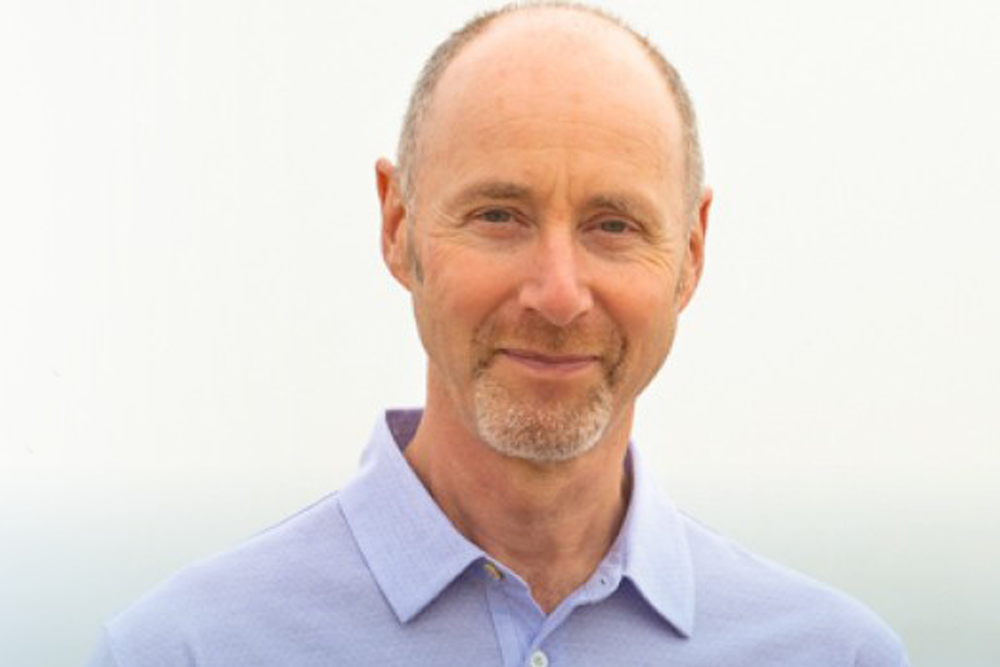
In this episode, the guys are joined by financial coach John Dashfield. John explains why our state of mind has such a powerful effect on the financial choices we make. When we are stressed, fearful or mentally busy, money can feel heavier than it needs to. But when the mind settles, we often find we are better able to make clear, thoughtful decisions.
The episode also explores the difference between intellect and insight, why money worries are not always about the money itself, and how creating a little space in our lives can help improve financial wellbeing.
Welcomes & Introductions
Chris Budd – Founder of Ovation Finance, the Institute for Financial Wellbeing and author of the original Financial Wellbeing Books, you can view all three here
Fancy a chat with Tom Morris, Chartered and award winning Financial Planner at Ovation? Contact details here
What’s on Today’s Podcast?
A chat with John Dashfield, a former financial adviser who now works as a financial coach and transformation coach. John’s work focuses on thinking, particularly how our thinking affects our experience of money.
Tight Ass Tommo
Light-hearted money saving tips, guaranteed to make you smile and think twice about your spending habits.
This time we explore leaving items in your online shopping basket
Interview with John Dashfield
- Challenging your own assumptions
- The role of thought in financial decisions
- Why money can feel so emotional
- Can we control our thoughts?
- Insight versus intellect
- Physics versus engineering
- Slowing down the busy mind
Conclusions from the Guys
Reflecting on the interview, David says his key takeaway is that we need to create space for the mind to relax.
Tom reflects on the connection between John’s message and the recent conversation with George Kinder. Both point towards mindfulness, presence and the importance of giving the mind room to settle.
Chris adds that happiness takes work. We do not simply wake up one day with life perfectly arranged around us. We need to be proactive, especially when it comes to money, because money worries are one of the biggest sources of stress.
John Dashfield is a financial coach and transformation coach with a long background in financial services.
After beginning his career in the 1980s, John worked as a financial adviser before selling his practice and moving into coaching. He now works with financial professionals, business owners and individuals, helping them understand their thinking, improve decision-making and develop a healthier relationship with money.
Want to know more? Connect with John on LinkedIn
Financial Wellbeing Podcast Transcript
Episode theme: Thinking clearly about money, wellbeing and better decisions
Welcome and introductions
Summary: David introduces the episode and the regular hosts, setting up the Financial Wellbeing Podcast’s familiar mix of humour, practical advice and thoughtful conversation.
David Lloyd:
Hello everybody, and good morning, good afternoon or good evening, depending on where you are in the world and what time of day it is.
Wherever you are, you are very welcome to another episode in our long-running series of Financial Wellbeing Podcasts.
My name is David Lloyd: screenwriter, lecturer, actor, bon vivant, man about town, increasingly semi-retired and absolutely loving it. I am the voice of reason and the everyman who asks questions of our two incredible financial brains when I do not quite understand what they are talking about. Hopefully, that helps make the subject a little more accessible for you, dear listener.
Let us introduce those two fantastic financial brains. We will start with you, Tom Morris, because you are already shaking your head and sighing in disbelief.
Tom Morris:
Yes, being called brainy does not happen too often, as my wife would probably confirm.
I am Tom Morris, wearer of many hats. I am a husband, father and junior rugby coach. Relevant to this podcast, I am also Managing Director and Chartered Financial Planner at Ovation Finance.
Ovation supports this podcast and has done for over a decade now. We are an independent Chartered financial planning firm based in Bristol, B Corp certified and employee owned. We are very proud of those things.
We are also keen to get the message of wellbeing out to as many people as possible, including any financial planners who might be listening, and hopefully improve wellbeing more widely.
David:
Great. Thanks, Tom.
And the whole notion of this podcast, and some may say the whole notion of financial wellbeing itself, comes from our other co-presenter, Chris Budd.
Chris Budd:
Thank you, David. And when you say “some may say”, that is really me, isn’t it? I would say that.
I am going to do a blatant plug, if I may. I have written three novels, and the third one, The Vanishing Point, is one I am really proud of. It did not sell many copies, partly because the second one, Manners from Heaven, was a bit more of a challenging novel. I am still proud of that one, but not everybody got on with it, so lots of people did not read the next one.
But The Vanishing Point is something I am really proud of. So I am going to say I am the author of the fantastic novel The Vanishing Point, currently available — well, I would like to say in all good bookshops, but probably Amazon is the best place to get it.
And today I am also wearing my late Nan’s curtains.
David:
For those listening rather than watching, Chris is wearing quite the shirt.
Chris:
I have a little tip for introverts. It is not a Tight-Arse Tomo tip, but it is a tip.
I am an introvert. I would call myself a high-functioning introvert, which means I am quite happy to be on stage, but it takes me a long time to recover afterwards.
One of the things that happens when I go to conferences or events is that, because of the podcast and the talks I have given, people sometimes come up and say hello. That is lovely, and I do like it, but as an introvert I also find it a little bit stressful.
If you wear a bright and loud shirt, it gives people something to talk to you about. They can tease you a bit or make a joke about the terrible shirt you are wearing. That is actually one of the reasons I wear bright and loud shirts. It is a distraction from the awkwardness I sometimes feel in social situations.
David:
Very interesting psychology there.
And just to rewind slightly, I have read The Vanishing Point, Chris, and I agree that it is excellent. Dear listener, if you have not read it, I suggest you get a copy. And while you are there, you could also get a copy of my novel, A Most Unwelcome Connection.
Tom:
What is a novel? I do not even read them, let alone write them.
David:
You will discover them when you are grown up, Tom.
Today’s guest: John Dashfield
Summary: Chris introduces John Dashfield, a financial coach whose work focuses on thinking, money and how our state of mind affects decision-making.
David:
Right, Chris, what are we talking about today?
Chris:
Today we have an interview with John Dashfield. He is a lovely chap and could be described in a number of ways, but “financial coach” is probably the simplest.
John has a lot of expertise in the area of thinking — specifically, how we think and how we can think better.
David:
I look forward to that.
But before we get to the interview, let us turn to the main point of the podcast: our expert in being mean, Tom Morris, also known as Tight-Arse Tomo. We hope he has another suggestion for how you can save money.
Tight-Arse Tomo’s tip: pause before buying
Summary: Tom shares a practical money-saving tip from his wife: delay online purchases and use multi-buy discounts only when you genuinely need the items.
Tom:
This one is from my dear wife, Lindsay, and I am very proud of her this year. One of her resolutions was never to pay full price for anything.
She has been working hard to find ways to get small discounts here and there, and it has been remarkable how much money she has managed to save.
One trick she found, particularly on Amazon, is that some items qualify for a discount if you buy four eligible items at once. They do not always have to be the same item, and they can come from different sections.
So what she has started doing is putting an item into the Amazon basket and then waiting a few days. Inevitably, the basket fills up with other things we actually need for the house.
This works in two ways. Sometimes, after a few days, she looks at the basket and thinks, “Actually, I do not need that anymore,” and takes it out. So it stops rushed purchases.
But if we do get to four items that we genuinely need, we get a small discount, often around 5%.
So it is a double benefit: you avoid buying things you do not really need, and if you do still need the items, you save a little money. Every little helps.
David:
Well done, Linz. I think that is great.
As you say, it brings in something we have talked about before: that feeling of “I need to buy this thing to make myself feel better.” But if you stop and think about it for a while, you may decide differently.
Spendthrift Devo: spending money to increase wellbeing
Summary: David offers the opposite perspective: sometimes spending money, when done consciously and affordably, can be a powerful investment in wellbeing.
David:
I do not have a Tight-Arse tip. Instead, I am going to be slightly controversial and suggest the complete opposite.
I think we should call this feature “Spendthrift Devo”, because I am going to advocate spending money in order to increase your wellbeing.
This links to things we have talked about many times over the years: what do you want your money for? What are you going to use it for? How does having money, spending money or not spending money make you feel?
My partner and I have recently returned from a five-week trip to New Zealand. We had a few days in Bangkok first, then went to New Zealand, hired a camper van, drove around and caught up with Gail’s son, who is working over there as a vet.
We also saw a lot of the beautiful country of New Zealand.
It cost an absolute fortune. It cost more money than I have spent on just about anything else. Was it money wasted? Absolutely not.
We came back from those five weeks relaxed, de-stressed and feeling that we had given ourselves a treat we had earned over a long period of time and paid for.
Rather than using that money on new carpet and curtains, which we do need and will eventually get, we used it to make ourselves feel better.
So sometimes, if you have the money, spending it can improve your wellbeing.
Tom:
I love that story. Of course, I knew about it and we had talked about it before.
Maybe the title should be “Dollar Divvy-Out Devo”? It needs work.
David:
It does need work. I will come up with an alliterative title for the next episode.
Chris:
What you are saying is really interesting. I speak to a lot of business owners who are looking to exit their businesses at some point, and I always ask them what they will do next.
Very rarely have they given it much thought. And when they have, it is almost always travel. Travel appears on almost everybody’s bucket list in some form.
There is a danger, though. If travel is the only thing, you come back from travelling and eventually the good feeling can dissipate until you go travelling again.
So it is important to have meaning, purpose and other things in your life as well. But travel can be incredibly meaningful if you design it in a way that matters to you.
Your trip involved family visits, which made it particularly purposeful for Gail. Putting thought into designing your holidays and travel can be a major source of wellbeing. It is a powerful way of spending money to create strong memories and wellbeing that lasts.
So I massively endorse your tip.
David:
It was not something we just decided on a whim. A huge amount of planning went into it. I had lots of conversations with Tom about whether I could afford it, and in the end we decided that yes, I could — because it was a good way to spend some of my money.
Two weeks before we were due to go, Gail broke her foot, and we wondered whether we should still go. In the end, we did. We adapted some of our plans, did less hiking than we expected, but it did not stop us having a fantastic time.
For five weeks we had no worries about family, the dog, work or anything else. It was a brilliant experience.
Introducing the interview
Summary: Chris explains that John Dashfield moved from financial advice into coaching, and that the conversation explores how our thinking affects money decisions.
David:
Right, let us move on and talk about your interview, Chris. Tell us more.
Chris:
John Dashfield was a financial adviser and then pivoted, as people liked to say during Covid. He became a transformation coach and a financial coach around money.
He is a really interesting person. The conversation is all about thinking, because thinking about money can be fearful, challenging and difficult.
When we try to think about money, there are often things that get in the way. John’s work is about how to think better, particularly around money.
Interview with John Dashfield
John’s background
Summary: John explains his career journey from financial services into coaching, and how his interest in people and behaviour shaped his work.
Chris:
John, thank you so much for joining us. How are you today?
John Dashfield:
I am very well indeed. Thanks, Chris.
Chris:
I love that. A nice, positive response.
Why do we not start with you introducing yourself? I know who you are, but our listeners may not. Tell us a bit about yourself, and then we will start asking you some tough questions.
John:
In the context of financial services, I got a job at a life office in the 1980s. I worked with financial advisers, of which there were probably 300 or 400 in the business I was working for.
Chris:
You can name names.
John:
It was AMP. They were a great company to work for at the time.
I spent a lot of time speaking with self-employed financial advisers and advising them on the technicalities of pensions.
Life on their side of the fence sounded much more interesting than on my side, so I joined their sales team. It was a very sales-orientated job back then, although we were called financial advisers.
In various forms, I had that practice for 15 years. I sold it at the end of 2005.
A couple of years before that, I had set up a coaching business because I had always been interested in people: what makes us tick, why we do what we do, why some days we feel on fire and other days we do not want to get out of bed.
I turned that interest into my profession. For the last 20 years I have worked with a lot of financial professionals, small business owners and SMEs. I still really enjoy it and still feel passionate and interested.
Chris:
The years when I learned about coaching and qualified as a business coach were pivotal in my career and life. The power of listening is amazing, is it not?
John:
It certainly is. The dynamic of having someone to communicate with in that capacity is hugely different from trying to do everything on your own. Not impossible, but very different.
Challenging your own assumptions
Summary: John explains why assumptions are hard to challenge alone: many of them are invisible to us. A coach can act as both flashlight and mirror.
Chris:
Let me warm you up with a question. I have long thought that it is very difficult, if not impossible, to challenge your own assumptions. What would you say to that?
John:
It is a really interesting question.
To challenge an assumption, you have to be aware of it. But the fact that it is an assumption often means you are not aware of it by definition.
From the work I have done over the years, I would say only a small percentage of our thinking is visible to us. A lot of our thinking influences our behaviour and how we move through the world, but we are not aware of it.
That is where having a coach, or a similar professional, can help. As a coach, you have two tools: the flashlight and the mirror.
The flashlight shines a bright light on something that probably does not usually have light shone on it.
The mirror reflects back to someone what you are experiencing.
That is how we wake up to ourselves.
Trying to do that on your own is difficult, if not impossible. Even if you become intellectually aware of a limitation, actually changing it is a completely different thing.
Chris:
That is a great phrase: the flashlight and the mirror. I might borrow that one.
The role of thought in financial decision-making
Summary: John argues that when we are stressed, insecure or anxious, our ability to make clear decisions decreases. Our state of mind is crucial.
Chris:
Thinking is one of your areas of expertise. Introduce us to the role of thought in financial decision-making.
John:
Here is something that looks true to me.
When a human being is in a low mood — feeling insecure, scared, worried, anxious, under pressure or stuck in their head — their ability to make wise, smart and clear decisions decreases.
One of the reasons I got into coaching was because I was curious about how really smart people could sometimes do really stupid things. We can all probably include ourselves in that.
Chris:
My hand is up.
John:
Exactly.
When people are insecure, their thinking becomes unreliable.
The opposite is also true. When people are clear-minded, present and have what I would call freedom of mind, they tend to make much better decisions.
So your state of mind in decision-making is absolutely crucial.
The role of thought is that the life we are all living moment by moment is really a psychological life. Our life is our thinking.
Thinking arises in our mind in real time, in the present. You cannot separate thought and feeling. If you have a sad thought, you will have a sad feeling. If you have an angry thought, you will have an angry feeling. If you have a calm thought, you will have a calm feeling.
This is happening moment by moment for all human beings.
Even understanding that can help people. If you know it is your thinking, that is very different from believing that an outside situation or circumstance is causing your experience.
Money and our relationship with it
Summary: John explains that we do not experience money directly. We experience our thinking about money, and that relationship can be insecure regardless of wealth level.
Chris:
So life is our thinking. How does money come into this? How does money affect our financial decisions?
John:
What we are experiencing is not the money itself.
Money is outside of us, whether it is physical cash or numbers in a machine. It is outside and independent of us.
But we all have a relationship with money and finances, and that relationship exists in our thinking.
It is how we think about money and finances that gives us the experience.
People can have a lot of insecure thinking about money because money is the medium of exchange. It is universal.
But the amount of money does not necessarily have much to do with the experience.
I was lucky enough to be coached by Michael Neill, who has a big following. Michael ghost-wrote a book called I Can Make You Rich by Paul McKenna.
As part of the research for that book, they interviewed seven billionaires and many other very wealthy people. Michael has written about coaching a man worth around 600 million who woke up every day terrified that he was going to lose his money.
Even though he had more money than he could spend in several lifetimes, his experience was still deeply insecure.
Chris:
So that would suggest money gets in the way of clear thinking.
John:
It is the thinking we have about money that creates our experience.
We can feel insecure about money or secure about money, and everything in between. And that changes depending on our state of mind.
Some days, if I am feeling low and I look at my finances, I might think, “That does not look too good.” On another day, when I feel secure and clear, I might look at the same circumstances and think, “Everything is fine.”
Nothing outside has changed, but my experience has changed because my state of mind has changed.
Can we control our thinking?
Summary: John suggests we do not have much direct control over our thoughts, but we can develop a healthier relationship with them.
Chris:
Is there anything we can do to have more ups than downs?
John:
I have looked deeply into this, and I do not think we have that much control over our thinking.
If we did, we would not have the mental health crisis we currently have in the Western world.
There is not a controller inside us choosing the thoughts we have.
But most people can relate to the fact that our experience of life goes down and up, down and up.
I explored the idea of control for about 20 years in different ways, and I had to conclude that we do not really have control.
However, understanding the nature and role of thought really helps people.
As human beings, we think. Our thinking is transient. It comes and goes.
We are not that much in control of it, but how seriously we take it determines whether it becomes a problem.
We can have a thought like, “I am not good enough,” or “My finances are in a terrible state,” or “I am not saving enough for retirement.”
If we take those thoughts seriously and start to believe them, the mind embellishes them. It starts creating all sorts of unpleasant scenarios. Our own thinking scares us, and we descend into a lower state of mind.
Seeing the nature of thought creates freedom from that. It is a thought. You do not have to have a relationship with it. If you let it pass, another thought will come.
Chris:
That suggests we should not always trust our own thoughts, or should at least be wary of them. That resonates with me. I get lots of negative thoughts. I started meditating a few years ago, and that is all about allowing thoughts to pass through.
“Do not trust your own thoughts” is quite a good takeaway, is it not?
John:
Do not necessarily trust your thoughts when you are in a low state of mind.
Insight and intellect
Summary: John explains the difference between insight and intellect. Insight is a fresh realisation from within; intellect is useful, but it can become overused.
Chris:
One of the words I have heard you use is “insight”. Why is insight important?
John:
An insight is a sight from within.
You could describe it as a realisation, a light bulb moment, an epiphany or a revelation. Those words can sound big and grand, but insight is an innate human capacity. We all have the ability to see something new.
Insight is important because when people change, they change through insight.
For example, if you used to feel insecure about money and then you no longer do, that happens because you have seen something you had not seen before.
People who have a better experience of life — who are generally happier, more content, more present and able to get joy from life regardless of circumstance — tend to navigate life through insight.
That is different from trying to navigate life purely through intellect.
Chris:
That needs a bit of exploring. What is the difference between insight and intellect?
John:
Let me use a sport example.
I worked with a client who had a very busy mind. They were always thinking, did not sleep well and could never switch off.
I asked whether there was any time their mind did switch off. They could not think of one.
So I asked what they loved doing. They said snowboarding.
I asked what they loved about it, and they said, “It is just a feeling.” I asked what feeling, and they said, “Inner peace.”
That was the beginning of an insight for them. They saw that they did have a quiet mind when snowboarding.
Then I asked what would happen if they had their usual busy mind while snowboarding. They said they would not be able to do it.
You cannot think your way to snowboarding. You cannot consciously think, “Turn here, move there, do this, do that.” At a proficient level, the adjustments and movements happen in the moment.
That is insight. It is presence. It is free from distraction.
Navigating the mountain is a parallel for navigating life. It feels better to navigate life through insight. That does not mean you do not plan, but there is a balance.
Chris:
So it is about balancing the two.
John:
Yes. Another example is going on holiday.
Last year, my partner and I walked part of a pilgrimage trail called the Via Francigena in Italy. We walked 100 miles into Rome.
That idea came from inspiration. It was not a purely logical decision. Neither of us had been to Italy and we thought, “Let us really see it. Let us do this walk.”
That was more insight and inspiration.
But then you still need intellect. You need to know how to get to the airport, when the plane leaves and how to get from the airport to where you are staying.
The inspiration comes first, then the logistical and intellectual planning follows.
Tools, techniques and understanding the mind
Summary: John discusses why he moved away from trying to control thoughts through techniques and towards understanding how the mind works.
Chris:
How can people get more of that balance — more insight and less busy mind?
John:
For a long time, because I had a really busy mind, I went down the route of tools, processes, strategies and techniques. I went deeply into those things.
Eventually, I had to conclude that you cannot really live like that. Other people may be able to, but I was not seeing it.
Chris:
What sort of things did you try?
John:
I went deeply into neuro-linguistic programming and positive psychology.
Chris:
That is an engineering approach, is it not? Trying to understand and control why we are thinking rather than being instinctive.
John:
Yes. A distinction I use, which I learned from Michael Neill, is physics versus engineering.
Engineering is trying to control your experience so that you have a better experience. It is trying to feel better about life and money.
Physics is understanding how the mind works. Not what to do with the mind, but how the mind works.
The mind works through thought and consciousness. Thought arises, and consciousness brings that thought to life.
These are the invisible mechanics behind our in-the-moment experience.
For me, after more than 30 years of exploring this, I saw two groups of people who tended to have a better experience of life.
One group was regular meditators. I meditated twice a day for over 12 years and got involved with transcendental meditation. The people I met in that world tended to be calmer, happier and more grounded.
The other group were people who came across what is sometimes called the Three Principles or innate health. I found that in 2011. People who have insights around the mechanics of the human mind often become less scared of their own experience.
They still get what I would call “stinky thinking”, as we all do, but they move through it more gracefully.
Slowing the mind down
Summary: Chris shares examples from Buddhism, yoga and nature, showing how slowing down can help us think more clearly.
Chris:
I want to share a story with you.
About six or seven years ago, I did some training in Buddhism. I was interested in the philosophy side of it.
On the first session, there were about 60 people. We were sent into rooms to talk about why we were there.
Everybody answered the question in some way connected to having a busy brain: “My brain is too busy,” “My life is too busy,” “Life is overwhelming me,” or “I cannot cope.”
Someone asked the volunteer leading the conversation, “If Buddha were here and we asked how to cope with life better, what would he say?”
The volunteer thought for a moment and said, “Buddha would probably say, ‘Go and have a cup of tea. You will be all right.’”
I loved that answer. There is no secret answer or magic bullet. It is just: relax a little, and then you will be able to make better decisions.
John:
I love that answer. It is brilliant, and it is so true.
But if you say to people, “Just relax into life,” it does not always feel satisfying.
Chris:
Because it is easy to say and not easy to do.
John:
Exactly.
The contemporary approach to psychological wellness does not seem to be working very well. A lot of people are suffering.
We live in an age with more wealth, opportunity, comfort and convenience than ever before, at least in our world. On that basis, we might think people should be relaxed into life. But many people are not.
Chris:
Your snowboarding example is interesting. For me, it was yoga.
I remember being in a difficult balancing position, and I had to concentrate completely on balancing. As I walked away from the session, I realised it was the first time in years that my brain had not been thinking about 10 things at once.
Another time, I was walking with my wife and she said, “Smell that hawthorn.” I realised I had not taken in anything around me.
Once I started focusing on something like the smell of hawthorn, my brain slowed down and I made better emotional decisions.
Any final tip for listeners on how they might slow things down and think a bit better?
Final advice from John
Summary: John encourages listeners to be kind to themselves and create space for the mind to relax, comparing the mind to a muscle that cannot stay tense forever.
John:
The thing that comes to mind is: be kind to yourself.
Create space in your life where your mind can relax.
If I tensed my bicep and tried to hold it tense all day, it would become very tiring. Eventually it would wear out.
That is what many people are doing with their minds. They are tensing them all the time.
Your mind is not designed to do that. Like a muscle, it needs to expand and contract. Your lungs expand and contract. Your heart expands and contracts. The same is true of the mind.
You have to allow your mind to relax.
Stop willfully thinking into things all the time. Be present.
When people go into nature, it is not necessarily nature itself giving them the experience. It is often that when they go into nature, they relax.
When they relax, things do not weigh on them as much. They make better decisions, life feels better and they get more insight.
It is like a snow globe. If you shake a snow globe, thousands of particles fly around and it is hard to see clearly. That is like having a mind full of thousands of thoughts.
When your mind settles, the insights become more obvious.
Chris:
John, that is a lovely, positive place to finish. Thank you so much. I really appreciate you joining us.
John:
Thank you. I really appreciate the opportunity.
Reflections after the interview
Being kind to yourself
Summary: David reflects that John’s message is about creating space for the mind to relax, which connects with his own experience of taking a long holiday.
David:
You said in your introduction, Chris, that you thought I would enjoy that interview, and I did.
There was a lot going on. Whenever you start talking about thinking, it opens up so many different avenues.
Trying to distil it down, my key takeaway is that John is saying: be kind to yourself. Create space in your life for your mind to relax.
Interestingly, I was talking before the interview about my holiday, and that did exactly that for me. I had time to think, and it helped me relax.
Just as your muscles cannot stay tense all day without making you tired, your mind is not designed to be constantly active.
Allowing it to rest — through nature, stillness or simply slowing down — helps clarity return. That means you are better placed to make the right decisions in your life.
So for me, the interview and my recent holiday fitted together very well.
Mindfulness and money
Summary: Tom reflects on the link between this conversation and previous discussions, including George Kinder, mindfulness and the importance of giving the brain space.
Tom:
Something jumped out from this interview and from the one we did a couple of episodes ago with George Kinder: the idea of mindfulness.
It is about giving your mind space to relax and giving yourself the tools to learn how it can relax.
It is not something I have ever exercised particularly much — mindfulness or meditation. But listening to that made me think: am I relaxing my brain enough? Do I allow it to unwind?
I am genuinely thinking that is an area I need to address.
Chris:
One of the lessons from the 10 years of podcasts we have done is that happiness takes work.
It does not just happen. You do not wake up one day and find that the world has aligned to make you feel good.
Quite the opposite. There are so many stresses on our time and in our lives that we need to be proactive in order to be happy.
That applies in general, but it particularly applies around money, because money pressures are one of the biggest sources of stress.
So we need to work at this stuff. It is great to hear you say that, Tom, but I want to hear that you are going to do something about it.
Tom:
Well, that is another matter altogether, is it not?
Different life stages, different pressures
Summary: David notes that creating space is easier at some life stages than others, especially when money worries are present.
David:
To be fair to Tom, Chris, and we have discussed this in previous podcasts, Tom is at a different stage of life.
I am half-retired. I have the time and the money to go away for five weeks and think and be and relax.
When you have young children and are trying to build a career, that becomes more complicated.
When I was younger, the only thing that really kept me awake at night, despite other issues in life, was worrying about money.
Once you can take that worry away, it becomes easier to open your mind and relax.
Chris:
I agree, David, but this is the important lesson.
For many people, “taking that worry away” means, “I need to achieve financial independence. I need to build wealth. That is how I take my money worries away.”
John’s lesson is different. He is saying: slow down. Create moments of space. It might only be 10 or 20 minutes.
Meditation, when I do it, is 20 minutes long. Take those small moments and they can have a big impact across the rest of your life.
But it takes work. You need to proactively do things.
Closing thoughts
Summary: David closes the episode by encouraging listeners to reflect on the conversation and continue exploring financial wellbeing.
David:
Wise advice from Chris. I do not think there are better words with which to sum up today’s podcast.
I hope you have enjoyed it. I hope it has given you food for thought. And I hope you will join us again in the future for another episode in our series of Financial Wellbeing Podcasts.
If you want to be notified of upcoming podcasts, make sure you click the subscribe button.
For more information on the topics discussed in today’s podcast, and to purchase a copy of The Financial Wellbeing Book, please visit www.financialwell-being.co.uk.
We would love to hear your thoughts and ideas on financial wellbeing. You can email us at contact@financialwell-being.co.uk.
You can also follow us on Twitter. The podcast is @finwellbeing, Chris is @OvationChris, and David is @Dave_Backwell.
This has been an Ovation Finance production.
Thanks for listening to The Financial Wellbeing Podcast: more interesting than you might think.
Podcast (podcasts): Play in new window | Download (Duration: 42:31 — 38.9MB) | Embed
Subscribe to episodes


More podcasts


Do you have any financial wellbeing questions you would like us to answer? Or do you have a #tightasstommo money saving tip you would like to share with our listeners?
If so, let us know by going to Twitter @Finwellbeing or email – contact@financialwell-being.co.uk
If you would like to purchase a copy of The Financial Wellbeing Book please click on this link to visit Penny Brohn UK shop